Introduction
If 2023 was the year of discovery and 2024 the year of experimentation, 2025 was the year the bill came due. Understanding how AI is used in marketing is no longer about testing novel tools. It is about survival in a landscape where algorithms dictate discovery and “trust” is the scarcest currency.
For founders and revenue leaders at mid-market companies, the stakes have changed. We are not just automating emails anymore. We are witnessing the rise of the “Agentic Web” where AI agents perform tasks on behalf of buyers and sellers alike. This guide cuts through the noise to show you exactly what shifted in 2025 and how to build a revenue-generating machine for the ai marketing world 2026.
What AI Is Used in Marketing?
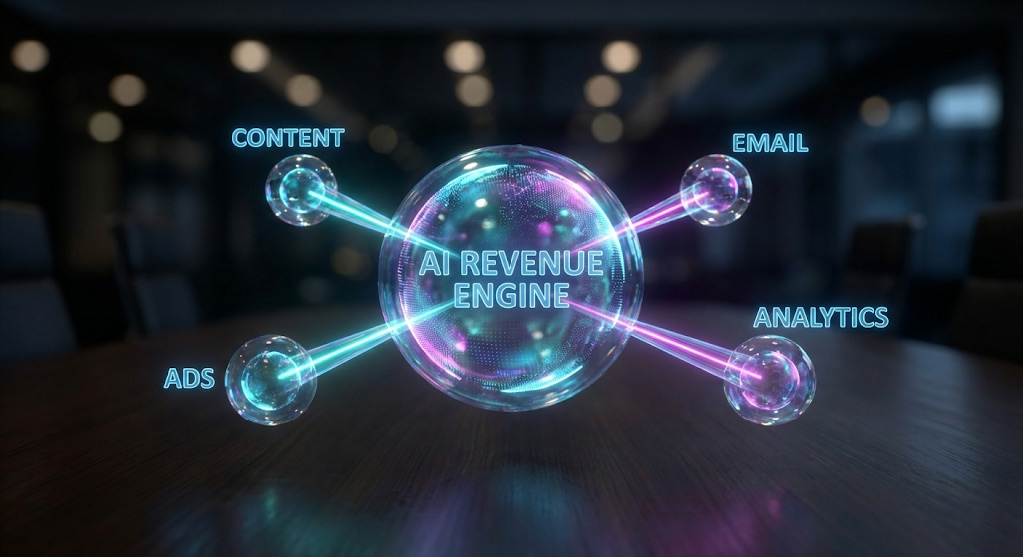
To navigate 2026, we must redefine our terms. AI in marketing is the application of machine learning and autonomous agents to predict buyer behavior, automate complex decision-making, and personalize experiences at scale.
It is no longer just about generating text. Real-world business examples include:
- Predictive Lead Scoring: Analyzing thousands of data points to tell sales reps who to call, not just when.
- Dynamic Pricing: E-commerce engines adjusting prices in real-time based on demand and inventory.
- Autonomous Ad Buying: Agents that reallocate budgets across Google and Meta without human intervention 24/7.
Is 2025 the Year of AI?
Many asked, is 2025 the year of AI? The data suggests it was actually the year of the “Reality Check.” While adoption skyrocketed, with McKinsey reporting that 88% of organizations now use AI in at least one function, the sentiment shifted.
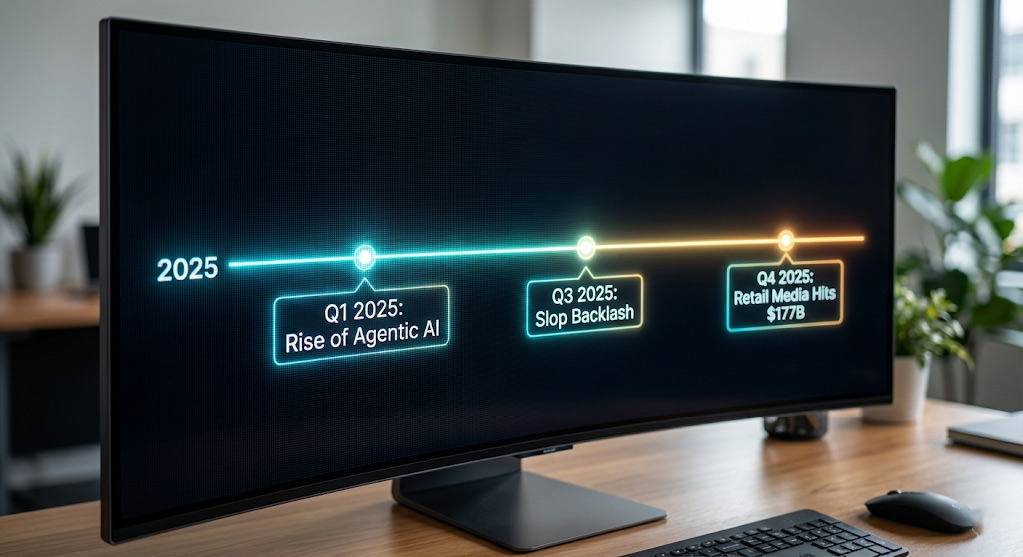
2025 was defined by two opposing forces:
- The Rise of Agents: We moved from “chatbots” that talk to “agents” that do. Gartner reported a massive surge in enterprise interest in agentic systems capable of executing multi-step workflows.
- The “Slop” Backlash: “Slop” (low-quality AI-generated content) became Merriam-Webster’s Word of the Year for 2025. This cultural pushback forced brands to stop using AI to replace human creativity and start using it to enhance backend operations.
2026 AI Landscape: The Age of Autonomy
The 2026 ai landscape is defined by a move from creation to orchestration. For mid-market businesses, this means you do not need a bigger marketing team. You need a better “AI Operating System.”
The focus has shifted to:
- Zero-Click Search: With Google AI Overviews and SearchGPT answering queries directly, traffic to informational blog posts is dropping.
- Data Sovereignty: As third-party cookies vanish, owning your customer data (First-Party Data) is the only safety net.
- The Trust Paradox: The more AI content floods the web, the more premium buyers place on verified human voices (podcasts, live events, branded video).
Key AI Marketing Trends for 2026
1. Autonomous Agents (Agentic AI)
Gartner predicts that by the end of 2026, 40% of enterprise applications will feature embedded AI agents, up from less than 5% in 2025. These are not just support bots. They are proactive digital workers that can:
- Identify a high-intent prospect on your site.
- Research their company.
- Draft a personalized outreach sequence.
- Book a meeting on your rep’s calendar.
For B2B teams, custom AI agents for lead validation are no longer optional. They are your first line of defense against pipeline leakage.
2. Personalization at Scale (The “Brand Twin”)
The concept of the “Brand Twin” emerged in 2025. This is an AI model trained specifically on your brand’s voice, data, and inventory. This allows for hyper-personalization where every customer interacts with a version of your brand that “remembers” them. Deloitte notes that personalization has transitioned from a buzzword to a revenue driver, with leaders in this space 3x more likely to exceed revenue targets.
3. Cross-Channel Optimization & Retail Media
Ad spend is fleeing the open web. Dentsu forecasts global ad spend to breach $1 trillion in 2026, with Retail Media Networks (RMNs) leading the charge. Why? Because RMNs (like Amazon or Walmart Connect) offer closed-loop attribution. AI now helps small brands bid on these platforms automatically, ensuring ad dollars are only spent on verified purchase intent.
4. Revenue Systems & Speed to Lead
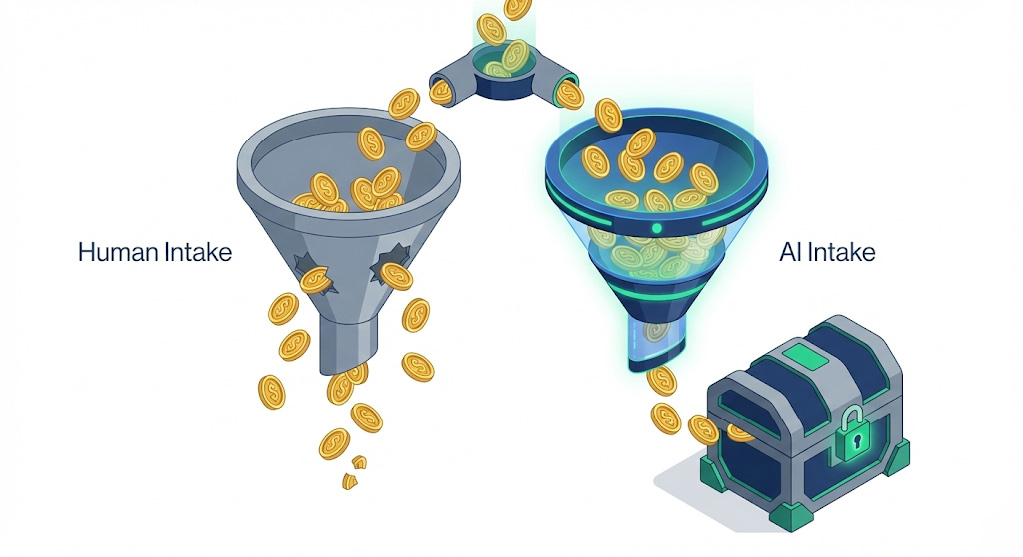
In 2026, speed will be the primary conversion metric. Studies show that responding to a lead within 5 minutes increases qualification odds by 21x. Humans cannot react that fast 24/7, but AI can. Automated “Speed to Lead” systems are now standard for high-performing revenue teams.
Proven Use Cases
Mid-market companies are seeing the highest ROI in these specific areas:
- Content Governance: Using AI to audit existing content for “AEO” (Answer Engine Optimization) rather than just churning out new blog posts. This ensures your brand appears in AI summaries on Google and Perplexity.
- Video Repurposing: Taking a single CEO vodcast and using AI to slice it into 20 social clips, blog posts, and newsletters. This leverages the “human premium” of video while using AI for distribution.
- Procurement & Sales: In B2B, AI agents are now being used to negotiate simple contracts and handle vendor intake, freeing up humans for strategic deal-making.
Challenges and Misconceptions
Despite the hype, the future of AI in marketing is not without potholes.
- The “Slop” Trap: Flooding your blog with unedited AI content will destroy your search rankings in 2026. Google’s algorithms and users alike are aggressively filtering out low-value, synthetic content.
- Integration Fatigue: McKinsey reports that while 90% of companies use AI, few have scaled it. The challenge is not buying the tool. It is integrating it into your CRM and data stack.
- The Trust Gap: 78% of consumers say transparency around AI is crucial. If you use AI to fake a testimonial or a human interaction, the backlash is immediate and severe.
Future of AI in Marketing: The 2026 Outlook
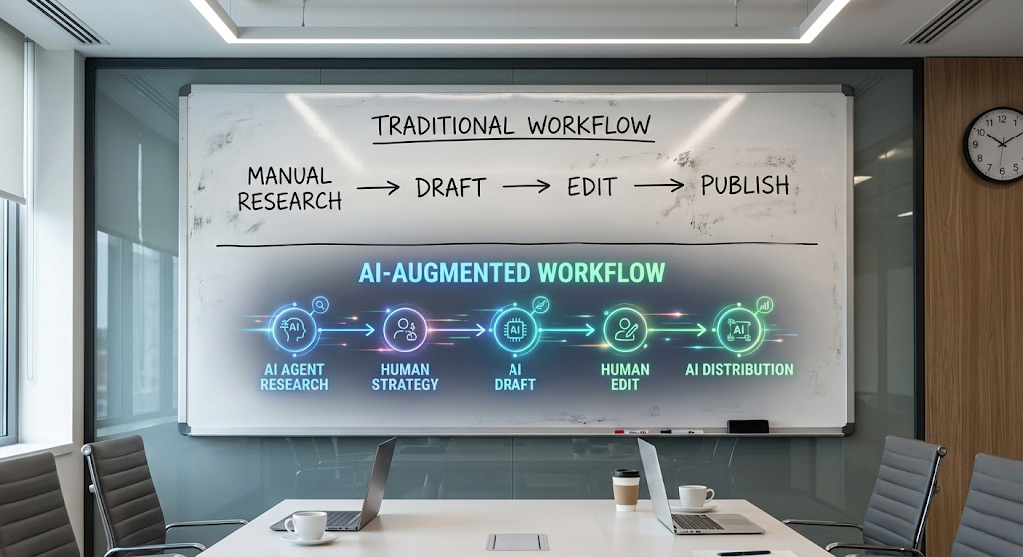
The future of ai in marketing belongs to the “Centaurs” (teams that fuse human strategy with machine execution).
In 2026, we will see the normalization of Agent-to-Agent (A2A) commerce, where a buyer’s AI agent negotiates with a seller’s AI agent. For business leaders, the mandate is clear: Stop looking for AI to do your thinking. Use AI to do your work, so your team can get back to thinking.
Build your “Data Fortress” now. Invest in analytics and performance tracking that you own. And crucially, invest in the human brand signals (video, community, and expertise) that no algorithm can replicate.
Ready to Future-Proof Your Revenue?
Don’t let the shift to 2026 catch you off guard. If you need a partner to help you build an AI-integrated marketing system that prioritizes revenue over hype, schedule a strategy audit with Power Reach AI today.
FAQ
Q: Will AI replace my marketing team in 2026?
A: No, but it will restructure it. Roles will shift from “creators” to “editors” and “orchestrators.” Teams that refuse to use AI for rote tasks will be outcompeted by smaller, faster teams that do.
Q: What is the biggest risk of using AI in marketing?
A: “Model collapse” and brand erosion due to “Slop.” Relying entirely on AI generation creates generic, untrustworthy content that alienates customers. Governance and human oversight are essential.
Q: How does AI impact SEO in 2026?
A: Traditional SEO is evolving into AEO (Answer Engine Optimization). Your goal is to be the “cited source” for AI answers (like ChatGPT or Google Overviews), which requires high-authority, structured data, not just keywords.
Q: What is Agentic AI?
A: Agentic AI refers to autonomous systems that can perceive, reason, and act to achieve goals without constant human input. Unlike a chatbot that waits for a prompt, an agent proactively executes workflows.
Q: Is email marketing dead in the age of AI?
A: Far from it. Email remains the highest ROI channel, but it requires smarter email marketing strategies. AI is now used to hyper-personalize send times and content, making email more relevant, not less.
Q: How much should SMBs spend on AI tools?
A: Instead of a fixed % of budget, view AI as a replacement for outsourced administrative costs. Shift budget from manual data entry or basic copywriting to AI tools, and reinvest the savings into high-quality human creative work.
Q: What is the “Trust Paradox”?
A: As digital content becomes cheaper and more abundant due to AI, human trust in digital content decreases. This increases the value of “verified” human experiences, such as live events, video podcasts, and community-led growth.
Q: How do I prepare my data for AI?
A: You must break down data silos. AI needs a unified view of your customer (CRM, website data, sales data) to function effectively. Investing in a clean data foundation is the first step to successful AI adoption.