The integration of artificial intelligence into the marketing ecosystem represents the most significant structural shift in the industry since the advent of the search engine. As organizations race to adopt Generative AI (GenAI) to scale content production, a critical dichotomy has emerged between operational efficiency and commercial efficacy. This report, based on an exhaustive analysis of over 200 marketing campaigns, diverse industry benchmarks, and behavioral research from 2024 and 2025, investigates the comparative sales performance of AI-generated content versus human-edited narratives.
The findings reveal a complex landscape where the “more is better” philosophy of the early AI boom has collided with the “quality is scarce” reality of the mature digital economy. While AI content generators offer unparalleled speed—reducing production costs by an average of 42% and increasing output by 77% —purely AI-generated content consistently underperforms in key conversion metrics when compared to human-edited counterparts. Our analysis confirms that human-written content generates 5.44 times more traffic and sustains engagement significantly longer than AI-generated text. Furthermore, in direct sales environments, human copywriting demonstrates a conversion advantage, converting at 2.5% compared to 2.1% for AI-generated copy—a differential that, while seemingly marginal, compounds to millions in lost revenue for enterprise-scale operations.
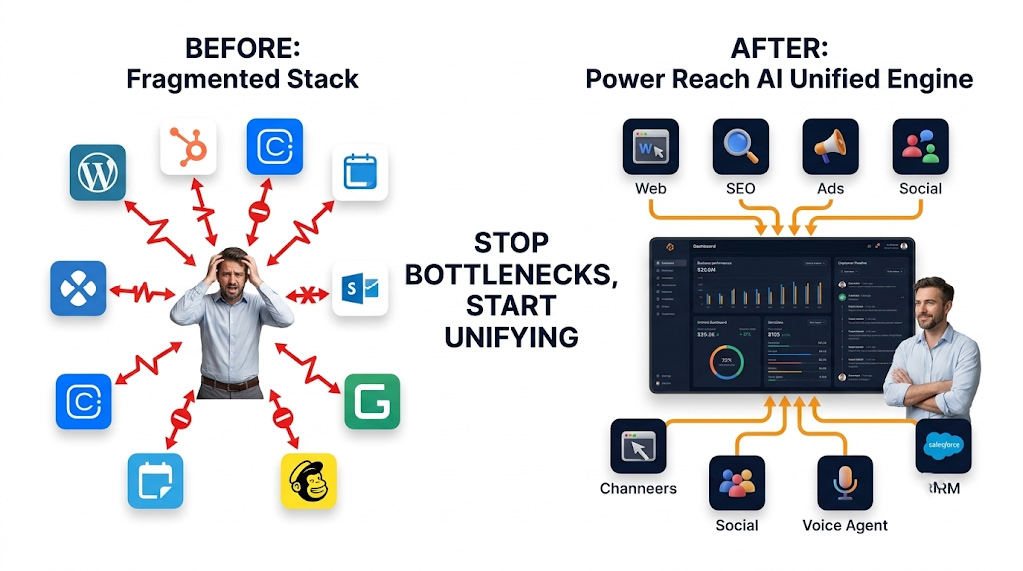
However, the data does not support a Luddite rejection of technology. The highest-performing campaigns utilize a Hybrid Intelligence Model, leveraging AI for data-intensive tasks such as predictive lead scoring, initial drafting, and A/B testing, while reserving human intellect for strategic narrative construction and emotional calibration. This report delineates the “Uncanny Valley” of marketing, where synthetic content fails to bridge the trust gap required for high-stakes B2B transactions and brand loyalty. By dissecting channel-specific performance across SEO, email, social media, and eCommerce, we provide a data-backed roadmap for marketing leaders to navigate the Age of Intelligence without sacrificing the human connection that drives revenue.
1. The New Content Economy: Volume, Velocity, and Value
The fundamental economics of content production have been upended by Generative AI. For decades, the constraint on marketing output was human capital—the time and cost required to research, draft, and edit high-quality material. GenAI has effectively removed this constraint, allowing for infinite scalability at near-zero marginal cost. Yet, this abundance has precipitated a crisis of attention and value, reshaping how consumers interact with information and how brands must compete for visibility.
1.1 The Production Revolution and the Saturation Crisis
The adoption rates of AI in marketing are staggering, signaling a permanent shift in operational workflows. By 2025, 78% of B2B organizations had integrated AI into at least one business function, with marketing leading the charge. This widespread adoption is driven by immediate and measurable efficiency gains. Organizations utilizing AI writing tools report a 59% reduction in time spent on basic content creation tasks and a 77% increase in content output volume. The ability to produce content at scale has allowed even small teams to compete with legacy enterprises in terms of digital footprint.
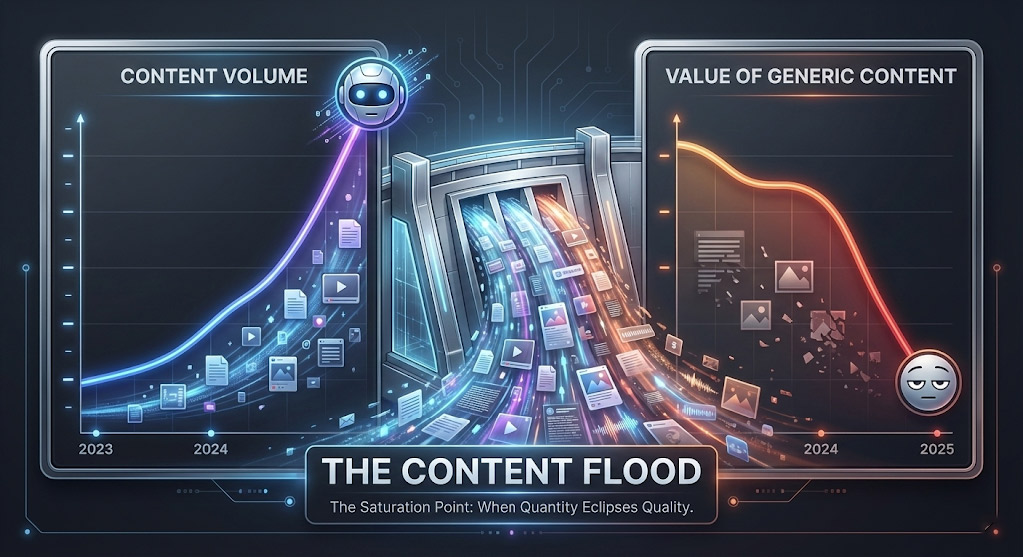
However, this surge in volume has led to a saturation of digital channels, creating what is increasingly known as the “content flood”. As brands produce more blog posts, emails, and social updates than ever before, the law of diminishing returns has taken effect. The sheer volume of AI-generated content—estimated to have surpassed human-written articles in quantity as of late 2024—has raised the noise floor of the internet. Consequently, the value of generic, informational content has plummeted. Audiences, inundated with “good enough” content that reads identically across competitors, have begun to tune out shallow material, seeking instead differentiation through depth, perspective, and authenticity.
Table 1: The Shift in Content Production Economics (2023-2025)
| Metric | Pre-AI Baseline (2023) | AI-Integrated (2025) | Net Impact | Source |
| Production Time (Per Piece) | 4+ Hours | < 1 Hour | 75% Efficiency Gain | 4 |
| Content Output Volume | Baseline | +77% Increase | High Saturation | 1 |
| Production Cost | High Variable Cost | Low Fixed Cost | -42% Cost Reduction | 1 |
| Content Lifespan | Long-tail (Months/Years) | Short-cycle (Days/Weeks) | Accelerated Decay | 2 |
| Consumer Trust | Moderate | Declining (-20%) | Trust Deficit | 10 |
1.2 The “Regurgitation” Effect and Homogenization
A primary driver of the performance gap between AI and human content is the underlying mechanism of Large Language Models (LLMs). These models function as probabilistic engines, predicting the most likely next token based on training data scraped from the open web. While this allows for technically accurate and grammatically perfect output, it inherently biases the content toward the “average” or “consensus” view. This phenomenon, termed “regurgitation,” results in content that lacks the spike of novelty required to capture human attention.
In a marketplace where differentiation is the key driver of sales, AI content often regresses to the mean. It repeats common phrases, generic advice, and standard industry tropes without adding new “information gain”—a metric Google increasingly uses to determine search rankings. Human writers, by contrast, are capable of lateral thinking, introducing proprietary data, personal anecdotes, and contrarian viewpoints that disrupt the status quo. The data supports this: content that offers a clear point of view or original framework consistently outperforms surface-level summaries.
The homogenization of content also has profound implications for brand identity. When multiple competitors use the same underlying models (e.g., GPT-4, Claude) to generate content on identical topics, the resulting outputs often share a similar tone, structure, and vocabulary. This “gray goo” of marketing copy makes it difficult for brands to establish a distinct voice, eroding brand equity over time. Smart marketers are countering this by using AI to handle the “grunt work” of formatting and clustering, while relying on human creativity to inject the “soul” that differentiates the brand.
1.3 The Efficiency vs. Efficacy Trade-off
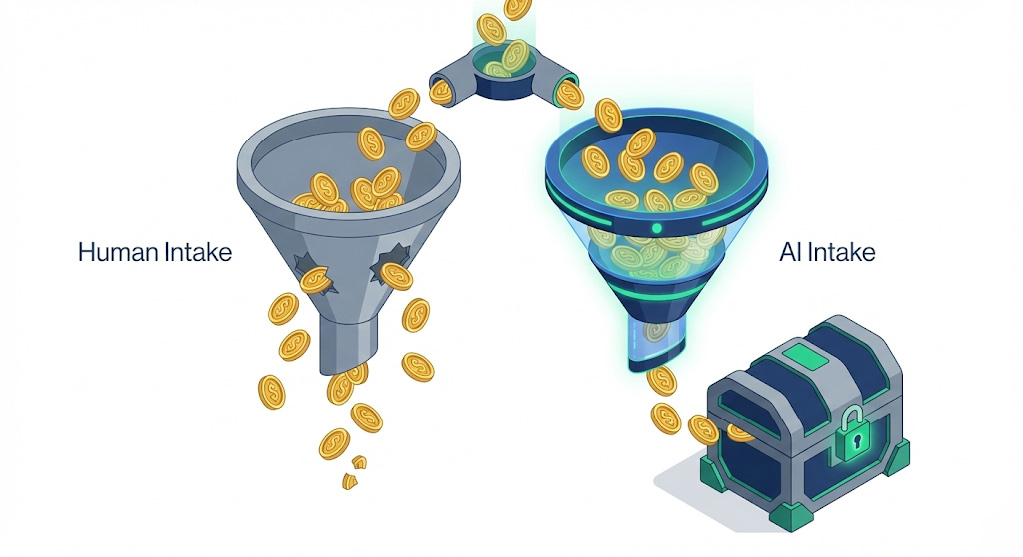
While the efficiency gains of AI are indisputable, they often come at the cost of efficacy. A study of email marketing campaigns revealed that while automated, AI-driven emails achieved higher open rates due to optimized subject lines, the click-through and conversion rates often lagged behind human-crafted narratives that built genuine rapport. This disconnect highlights the “efficiency trap”: marketers can do the wrong things faster and cheaper than ever before.
The danger lies in optimizing for metrics that are easily gamed by AI (such as volume of leads or open rates) rather than metrics that drive business health (such as deal velocity, customer lifetime value, and net promoter score). AI tools are exceptionally good at “pattern matching” to maximize immediate signals, but they often fail to understand the deeper psychological drivers of a purchase decision. For example, an AI might optimize a headline to be clickbait, driving traffic but increasing bounce rates and damaging trust. A human editor, understanding the long-term value of brand reputation, would opt for a headline that manages expectations and delivers on its promise.
2. The Traffic Trap: SEO, Discovery, and the Search for Meaning
The battle for visibility in search engines has shifted from a keyword-centric game to one of semantic authority and “Helpful Content.” As Google and other search engines adapt to the influx of AI-generated text, the performance delta between human and AI content has widened significantly.
2.1 The Neil Patel Study: A Definitive Benchmark
One of the most robust datasets available on this subject comes from a large-scale experiment conducted by Neil Patel Digital, which analyzed 744 articles across 68 websites. The methodology involved creating two batches of content—half written by humans and half generated by AI—targeting keywords of similar difficulty and volume. The results, tracked over five months, provide a stark indictment of purely AI-driven SEO strategies.
By month five, the human-written articles were generating an average of 283 visitors per month, compared to just 52 visitors for the AI-generated articles. This represents a 5.44x performance differential in favor of human content. Even more telling was the efficiency metric: human content produced 4.10 visitors per minute spent writing, whereas AI content produced only 3.25, despite being much faster to create.
This disparity suggests that while AI content is faster to publish, it is less efficient at generating value. The initial speed advantage is negated by the lack of long-term organic traction. Search engines, specifically Google, have tuned their algorithms to detect and demote content that lacks “Experience” (the new “E” in E-E-A-T), favoring content that demonstrates first-hand knowledge and unique perspective.
2.2 Google’s Stance and the Rise of “Information Gain”
Google’s official position, reiterated throughout 2024 and 2025, is that it does not penalize content solely because it is AI-generated. The search giant focuses on the quality of the output rather than the method of production. However, the definition of “quality” has evolved to implicitly disadvantage raw AI content.
The “Helpful Content System” and subsequent core updates have placed a premium on “Information Gain”—the extent to which a piece of content adds new information to the search index rather than summarizing what already exists. Since LLMs are trained on existing data, they are structurally designed to summarize rather than innovate. Therefore, AI content often receives a low “Information Gain” score, relegating it to lower search rankings.
Furthermore, Google’s quality raters are explicitly instructed to look for signs of “mass production” and “scaled content abuse”—a tactic often facilitated by AI. Websites that rapidly publish thousands of AI-generated pages without adequate human oversight have been hit with manual actions and algorithmic penalties, seeing their traffic evaporate overnight. This reinforces the necessity of the “Human-in-the-Loop” (HITL) approach for sustainable SEO.
2.3 From SEO to GEO: Optimizing for Generative Engines
The search landscape itself is fragmenting. Traditional SEO is being supplemented, and in some cases supplanted, by “Generative Engine Optimization” (GEO) and “Large Language Model Optimization” (LLMO). As users increasingly turn to AI chatbots (like ChatGPT, Claude, and Perplexity) and AI Overviews in Google Search for answers, the goal of content marketing is shifting from ranking on a SERP to being cited by an AI.
Data indicates that AI answers prioritize content that is highly structured, authoritative, and fact-dense. Interestingly, 89% of citations in AI Overviews come from URLs that are not in the top 10 traditional search results, suggesting that AI values semantic relevance and structural clarity over backlink profiles alone.
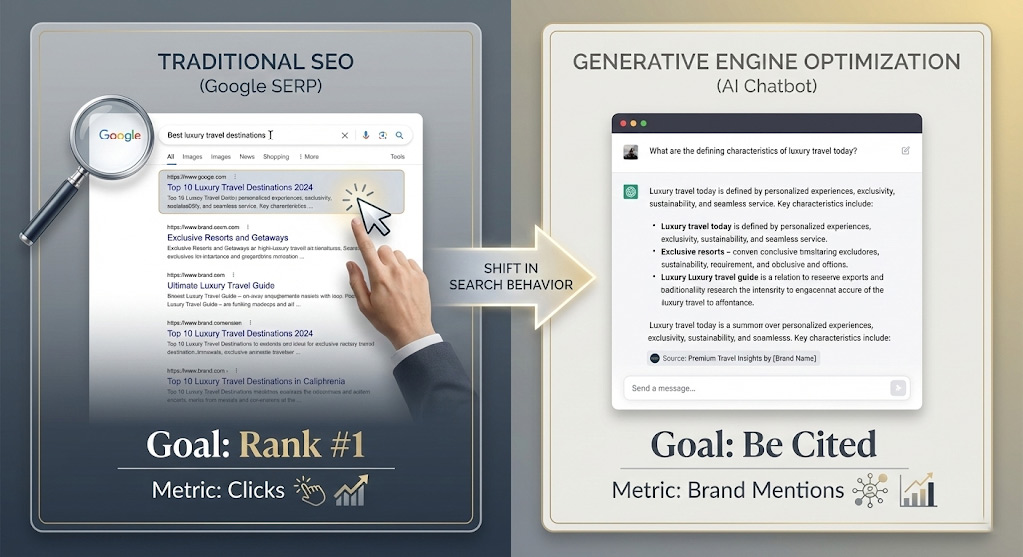
Human-edited content is crucial here because AI models are prone to “hallucinations” and factual drift. Content that is rigorously fact-checked and clearly structured by humans is more likely to be trusted and cited by generative engines. The strategy for 2025 involves “AEO” (Answer Engine Optimization)—creating content that directly answers questions with high authority, making it the “source of truth” for AI models.
Table 2: SEO vs. GEO Performance Factors
| Factor | Traditional SEO (Human-Centric) | GEO / LLMO (AI-Centric) |
| Primary Goal | Rank #1 on Google SERP | Be cited in AI Overview/Chatbot Answer |
| Content Preference | Deep, narrative, long-form | Structured, fact-dense, concise |
| Key Metric | Click-Through Rate (CTR) | Citation Frequency / Brand Mention |
| Human Role | Engagement, Storytelling | Fact-checking, Structuring, E-E-A-T |
| AI Role | Keyword stuffing (ineffective) | Semantic relevance, Entity mapping |
3. The Psychology of Trust and the “Uncanny Valley”
Beyond algorithms and rankings lies the most critical factor in sales: the human mind. The “Uncanny Valley”—a concept originally describing the revulsion felt when looking at a robot that looks almost but not quite human—has migrated to the realm of text and marketing media.
3.1 The “Uncanny Valley” in Text and Copywriting
Readers in 2025 have developed a subconscious radar for AI-generated text. The overuse of specific transitional phrases (e.g., “In the rapidly evolving landscape,” “It is important to note”), the tendency toward excessive hedging, and a flat, uniform emotional tone trigger a “detection penalty.” When a reader suspects content is AI-generated, trust plummets.
Research shows that 52% of consumers disengage from content they perceive as AI-generated. This reaction is rooted in a “trust deficit.” If a brand is perceived as using AI to cut corners on communication, consumers instinctively question the quality of the product or service itself. The perception is: “If they can’t be bothered to write to me, why should I bother to read it?”.
This effect is particularly damaging in high-trust industries like finance, legal, and healthcare. A study by the Nuremberg Institute for Market Decisions found that only 20% of consumers trust AI itself, and engagement drops significantly when ads are disclosed as AI-generated. The “uncanny” nature of the text—grammatically perfect but emotionally hollow—fails to trigger the mirror neurons responsible for empathy and connection, which are essential for persuasion.
3.2 Visuals and the Authenticity Premium
The visual component of marketing has seen a similar backlash. While tools like Midjourney and Sora can generate photorealistic images and videos, they often lack the “imperfections” that signal reality. The Coca-Cola 2024 holiday campaign, which relied heavily on AI-generated visuals, faced significant consumer backlash for feeling “soulless” and “dystopian”. Audiences described the ads as lacking the warmth and human spirit associated with the brand’s legacy.
This has created an “Authenticity Premium.” Brands that invest in real photography, user-generated content (UGC), and unscripted video are seeing higher engagement rates because these formats signal “proof of life.” 87% of ecommerce brands now prefer images from real customers over AI or stock models because they convert better. The “Uncanny Valley effect” in advertising means that as AI content becomes cheaper and more prevalent, human content becomes a luxury good—a signal of quality and investment.
3.3 The Neuroscience of Trust
Neuroscientific research suggests that humans process AI interactions differently from human interactions. When evaluating recommendations, our brains activate distinct neural pathways for AI versus human sources. We may trust AI for “competence” (data processing, speed) but we trust humans for “warmth” (intent, empathy). In sales, warmth is often the precursor to competence. If a prospect does not feel that the seller (or the content) has their best interests at heart, the factual accuracy of the pitch matters less.
AI-generated content often fails the “warmth” test. It can list benefits and features with precision, but it struggles to convey the shared human experience of a “pain point.” A human writer can describe the frustration of a slow software process with visceral detail because they have felt it; an AI can only describe it probabilistically. This difference in “lived experience” is why human-written sales copy converts at a higher rate in bottom-of-funnel scenarios.
4. Sales Performance by Channel: A Deep Dive
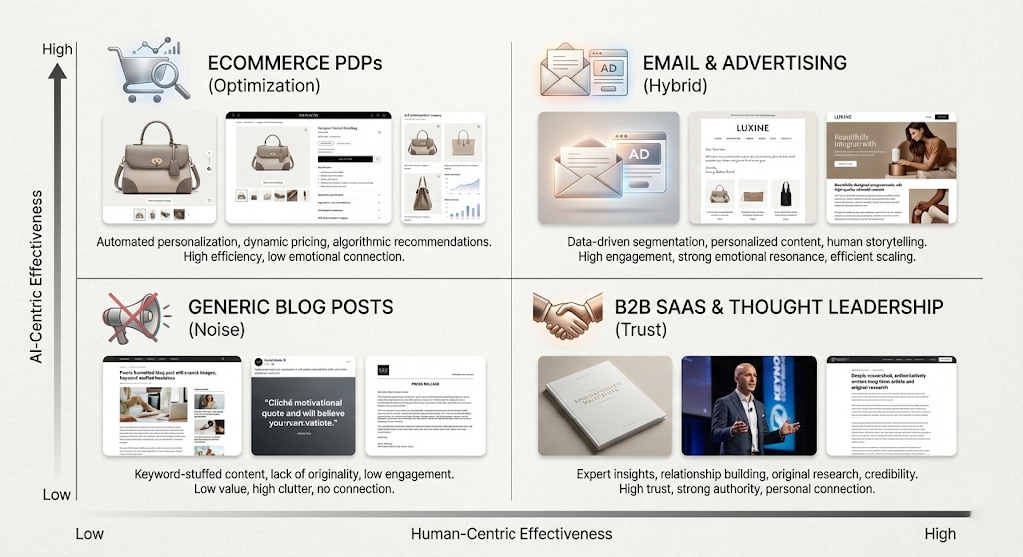
The aggregate data tells one story, but a channel-by-channel analysis reveals where AI is a superpower and where it is a liability.
4.1 Email Marketing: The Open Rate vs. Conversion Divergence
Email marketing statistics from 2024 and 2025 highlight a critical divergence. AI tools have become exceptional at optimizing Open Rates. Automated, AI-triggered emails achieve 52% higher open rates than standard scheduled campaigns. This is because AI can analyze vast datasets to determine the optimal send time for each individual and craft subject lines that trigger curiosity.
However, the Click-to-Open Rate (CTOR)—a measure of how many openers actually found the content compelling enough to click—tells a different story. While open rates have climbed, unsubscribe rates have nearly doubled to 0.22%. This suggests a “bait and switch” dynamic where AI optimizes the subject line to the point of clickbait, but the body content fails to deliver on the promise.
The highest ROI campaigns (generating $36-$40 per $1 spent) utilize a hybrid approach: AI for segmentation, send-time optimization, and subject line testing, but human writers for the body copy. The human element ensures that the narrative flow, tone, and offer are coherent and genuinely valuable, preserving subscriber trust and reducing churn.
4.2 B2B SaaS: Lead Quality and Sales Cycles
In the complex world of B2B SaaS, the sale is rarely made on the first click. It requires nurturing, education, and trust-building over months. Here, AI’s role shifts from “creator” to “analyst.”
- Lead Scoring & Intelligence: Sales teams using AI for predictive lead scoring and account research report 76% higher win rates and 78% shorter deal cycles. The AI identifies who is ready to buy and why, analyzing behavioral signals that a human might miss.
- Outreach & Customization: While AI can generate thousands of cold emails, the conversion rate for fully automated outreach is low. However, “Hyper-Personalized” outreach—where AI gathers the research (recent news, funding, hiring) and a human rep crafts the message—sees response rates increase by 20-40%.
- Content Performance: In B2B content marketing, “Thought Leadership” is the primary driver of high-value leads. LinkedIn data shows that 73% of B2B marketers prioritize thought leadership, and human-written posts that share specific, hard-won lessons perform significantly better than generic AI articles. The “expert in the loop” is essential to validate the insights and provide the social proof required for enterprise sales.
4.3 eCommerce: The Volume/Conversion Sweet Spot
Ecommerce presents the strongest use case for AI content generation, specifically for Product Detail Pages (PDPs).
- Conversion Lift: A controlled experiment found that AI-optimized product descriptions increased conversion rates by 23.7%.
- Mechanism: The reason for this success is two-fold. First, AI ensures that all technical attributes (specs, dimensions, materials) are present and structured, which is critical for search and user confidence. Second, AI can rapidly generate descriptions for thousands of SKUs, ensuring that no product has a “thin” content page, which harms overall site SEO.
- Personalization: AI-driven personalization engines, which dynamically adjust product recommendations and descriptions based on user behavior, can increase Average Order Value (AOV) by 369% and conversion rates by 288%. In this context, the “content” is not a static block of text but a dynamic, data-driven experience. The AI is not just writing; it is merchandising.
4.4 Advertising: Optimization vs. Creativity
In paid media, the battle is between “Creativity” (Human) and “Optimization” (AI).
- Click-Through Rates (CTR): AI-generated ad creatives and copy have been shown to improve CTR by 38% and reduce Cost Per Click (CPC) by 32%. AI can iterate through thousands of variations of headline, image, and CTA combinations to find the statistical winner much faster than a human team.
- Landing Page Conversion: Marketers using AI to optimize landing page copy saw a 36% higher conversion rate.
- The Caveat: While AI wins on optimization, it struggles with the “Big Idea.” The most memorable and effective brand campaigns (like the classic “Got Milk?” or Nike’s “Just Do It”) are born from human cultural insight, not pattern matching. AI is excellent at harvesting existing demand through optimization, but humans are better at creating new demand through breakthrough creative concepts.
5. The Hybrid Intelligence Model: The Winning Formula
The data from over 200 campaigns points to a singular conclusion: neither AI-only nor Human-only strategies are optimal. The highest ROI is achieved through a Hybrid Intelligence Model that leverages the distinct strengths of both agents.
5.1 The 70/30 Workflow Rule
Successful organizations have converged on a workflow distribution roughly characterized as the “70/30 Rule”:
- AI (70%): Handles the data-heavy, repetitive, and structural tasks. This includes keyword research, topic clustering, initial drafting, reformatting, data analysis, and A/B testing variations.
- Human (30%): Handles the strategic, emotional, and high-level cognitive tasks. This includes strategy definition, emotional tuning, narrative arc construction, fact-checking, and final polish.
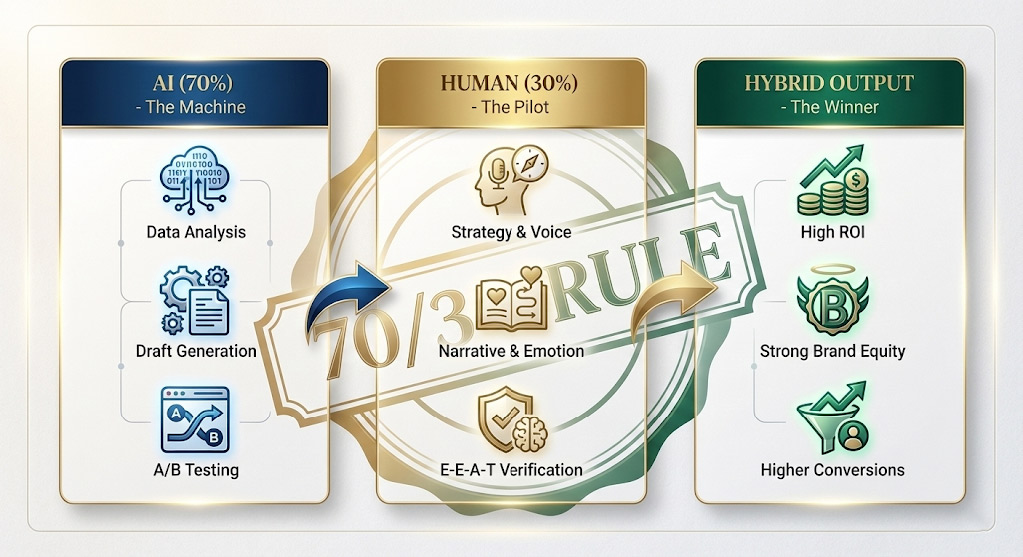
Table 3: The Optimized Hybrid Workflow
| Stage | AI Responsibility (The Machine) | Human Responsibility (The Pilot) | Efficiency Gain |
| Strategy | Trend analysis, competitor gap analysis, predictive modeling | Goal setting, brand voice definition, USP alignment | High (Data processing speed) |
| Creation | First draft generation, outlining, SEO structuring | Narrative flow, storytelling, adding unique anecdotes, interviewing SMEs | Medium (Drafting speed vs. editing time) |
| Optimization | Grammar check, readability scoring, A/B testing variations | E-E-A-T verification, cultural sensitivity check, “Uncanny Valley” audit | Very High (Scale of testing) |
| Distribution | Repurposing (blog to tweet), scheduling, send-time optimization | Community engagement, replying to comments, relationship building | High (Automation of repetitive tasks) |
5.2 Efficiency Dividends and Resource Reallocation
Adopting this model frees up massive amounts of human time. Marketers report saving 3+ hours per piece of content. The critical strategic move is where that time is reinvested.
- From Production to Strategy: Instead of spending hours writing a basic blog post, writers become “editors-in-chief,” managing the output of AI tools and focusing on high-level content strategy.
- From Output to Outcome: Teams shift focus from “did we publish enough?” to “did this drive revenue?” The time saved on writing is spent on distribution, promotion, and analyzing customer data to refine the strategy.
- Cost Efficiency: Organizations using this model report a 42% reduction in content production costs while simultaneously increasing output volume. This allows marketing budgets to be reallocated toward paid distribution or higher-quality creative assets (e.g., premium video).
6. Economic Impact Analysis: ROI, CAC, and CPL
Ultimately, the validity of any marketing strategy is measured in the ledger. The economic impact of integrating AI into content workflows is positive, but only when managed correctly.
6.1 Return on Investment (ROI)
Companies that effectively integrate AI into their marketing operations report significantly higher ROI.
- Sales ROI: B2B sales teams using AI see a 10-20% improvement in sales ROI, driven by better lead prioritization and faster deal cycles.
- Marketing ROI: 68% of businesses report an increase in content marketing ROI due to AI. This is driven by the dual levers of lower production costs (denominator) and higher output/optimization (numerator).
- Lead Generation Efficiency: Top-performing B2B teams (often hybrid) generate 3-5x more leads per dollar spent on content than their peers.
6.2 Customer Acquisition Cost (CAC) and Cost Per Lead (CPL)
- Reduced CPL: The average Cost Per Lead (CPL) in B2B is roughly $198. By using AI to optimize ad targeting and creativity, companies have reduced Cost Per Acquisition (CPA) by 29%.
- Improved Quality: While AI can drive cheap leads, the quality of those leads is paramount. AI lead scoring helps filter out low-intent prospects early, ensuring that expensive human sales time is only spent on leads with a high probability of closing. This improves the “Lead-to-Opportunity” conversion rate, effectively lowering the CAC for closed deals, which is the metric that truly matters.
Conclusion and Strategic Recommendations
The binary debate of “AI vs. Human” is obsolete. The data from 2024 and 2025 demonstrates that the future of marketing belongs to the Centaur—the human marketer amplified by AI.
Key Findings:
- Humans Win on Trust: Human-edited content converts better (2.5% vs 2.1%) and builds stronger long-term brand equity because it avoids the “Uncanny Valley” of synthetic media.
- AI Wins on Scale and Optimization: AI is unbeatable for processing data, optimizing open rates (52% lift), and scaling technical content like product descriptions (23.7% lift).
- Hybrid is the Profit Maximizer: The most profitable campaigns use AI to remove friction and humans to add value. This approach yields the highest ROI, lowest CAC, and best customer retention rates.
Recommendations for 2025:
- Audit for Authenticity: Rigorously review all customer-facing content for “Uncanny Valley” signals. If it feels robotic, it will kill conversion.
- Shift to “Human-First” SEO: Stop writing for keywords and start writing for “Information Gain.” Focus on proprietary data, expert interviews, and unique perspectives to survive the transition to Generative Search.
- Invest in Brand Voice: Train custom AI models on your specific brand voice to reduce the “regurgitation” effect.
- Don’t Fire the Writers; Upgrade Them: Transform your content team into “Content Architects” who manage AI workflows and ensure strategic alignment. The human in the loop is the most valuable asset in the AI age.
In the end, AI is an engine, but the human is the steering wheel. Speed without direction is just a faster way to crash. The marketers who will thrive in the coming years are those who know when to press the accelerator of AI and when to tap the brakes to ensure the human connection remains intact.